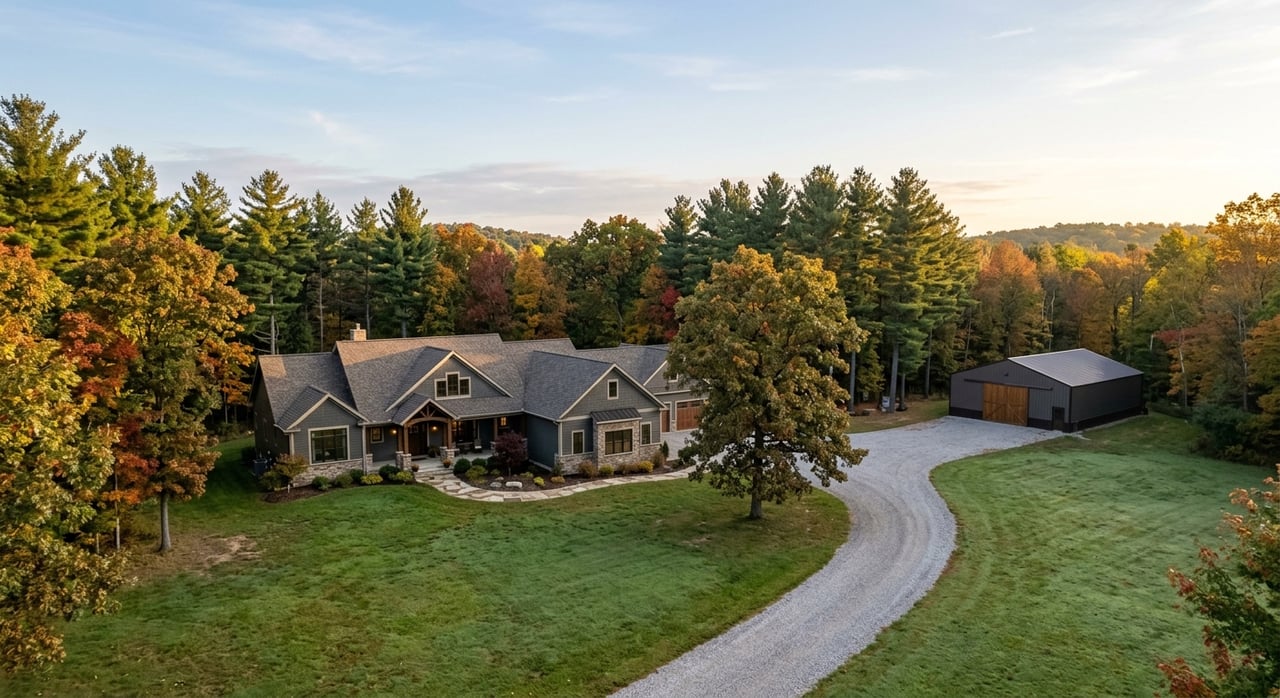
Buying a home with acreage sounds simple until you realize you are not just evaluating a house. In Sanilac County, you may also be evaluating parcel lines, zoning approvals, well and septic systems, driveway access, drainage, and possible environmental review. If you want more space and fewer surprises, this guide will help you focus on the right questions before you buy. Let’s dive in.
Why acreage buying is different
Sanilac County covers 962.57 square miles of land and had a population of 40,611 in the 2020 Census. That larger rural footprint means properties can vary a lot from one parcel to the next. What works on one site may not apply to the next one down the road.
With acreage, more land often means more due diligence. You are not just checking the condition of the home. You are also checking boundaries, access, utility systems, permits, and any limits on how you can use the land.
Start with the parcel details
One of the first smart steps is reviewing the parcel itself. Sanilac County’s GIS parcel viewer can help you search by parcel ID, owner name, address, or even an intersection. That gives you a practical way to confirm parcel shape, ownership, and tax-history context early in the process.
This matters because acreage listings can look straightforward online but feel very different once you study the map. A long narrow parcel, an irregular boundary, or a split parcel can affect how you use the property. It can also affect future plans for outbuildings, additions, or access.
Check for recent splits
If the parcel was recently split, the county requires a certified recorded boundary survey and proof of ownership before issuing a building permit. Sanilac County also says splits must be approved in advance by Equalization. That makes recent acreage splits an important item to verify early.
A recent split is not necessarily a problem. It just means you should confirm that the paperwork is complete and recorded properly. That can save you time and stress if you want to build, expand, or make site improvements later.
Review boundaries and easements
Acreage buyers should ask a surveyor or title professional about encroachments, boundary concerns, and easements. Even if a parcel looks clear on a listing map, actual use areas may be affected by recorded access, utility, or drain easements. Those details can shape where you can build or install improvements.
Zoning matters before you make plans
Before Sanilac County issues a building permit, the application requires zoning approval from the local city, village, or township zoning administrator. It also requires a scaled site plan showing property lines and the exact location of existing and proposed buildings. That is a strong reminder that your plans need local approval, not just a good idea on paper.
If you are buying acreage because you want extra flexibility, ask questions before your offer is final. That includes plans for a barn, pole building, detached garage, workshop, livestock use, or future home addition. The right parcel for you is the one that matches both your lifestyle goals and the local zoning rules.
Private roads and driveways
The county’s permit guidance says that if you are building on an approved private road, you should ask for Article 14.28 of the Land Development Code. It also says that if you are changing the use of the property or installing a new driveway, you need a driveway permit from the authority with road right-of-way jurisdiction.
That means access is not something to assume. A property may have frontage, but you still need to confirm how legal access works and what approvals may be needed for changes.
Wells and septic are major acreage issues
In Michigan, private septic systems are common. EGLE notes that about 35% of Michigan residents are served by private septic systems. In Sanilac County, the Health Department Environmental Health Division handles septic and well permitting, which makes that office an important resource during your due diligence.
On acreage, well and septic questions should come up early. These systems affect daily use, future improvements, and long-term maintenance costs. They are just as important as the home itself.
What to ask about the septic system
The county’s septic permit application requires a detailed scaled site plan, legal description, property size and road frontage, and whether the work is for a new system or replacement. As a buyer, ask for the septic permit, system layout, last pump-out date, and any known repair history.
If you plan to add bedrooms, finish a basement, or expand the home later, confirm whether the existing septic system is sized for your intended use. MSU Extension advises homeowners to contact the county health department if changes to the home may require septic modifications.
MSU Extension also recommends pumping a septic tank about every 3 to 5 years, depending on tank size and occupancy. It advises owners not to drive over the tank or drainfield, plant deep-rooted vegetation nearby, or overload the system with too much water.
What to ask about the well
A private well is another key part of acreage ownership. Sanilac County’s well instruction sheet shows that a site plan must account for isolation distances involving the well, septic tank, drainfield, property lines, ponds, lakes, streams, and ditch or tile drains.
The county also notes that additional isolation distances may apply for storage tanks and manure pits. That is especially relevant if the parcel is near agricultural activity or if you are considering a hobby-farm style property.
EPA guidance says private well owners should test annually for total coliform bacteria, nitrates, total dissolved solids, and pH. It also says to retest after flooding, land disturbance, new construction, well repairs, or noticeable changes in water quality.
If the property borders cropland, livestock use, manure storage, or other intensive agricultural activity, EPA says it is reasonable to consider testing for nitrate, nitrite, pesticides, and coliform bacteria. In a market like Sanilac County, that is a practical question, not an unusual one.
Access, roads, and drainage can affect daily life
When you buy acreage, the route in and out matters. The Sanilac County Road Commission handles road and bridge construction and maintenance, snow removal, salting and sanding, gravel road grading, and roadside ditch and drain maintenance. Those services can have a real effect on convenience and upkeep.
A larger parcel may also mean a longer driveway, a gravel approach, or more exposure to ditch and culvert issues. That is why it helps to ask who maintains the road, shoulder, ditch, and culvert serving the property.
Watch for county drain easements
If a parcel touches a county drain or drain easement, site work can become more involved. Sanilac’s Drain Commissioner permit for crossing a county drain requires at least 10 business days of prior notice, a $250 permit application fee, a $1,000 deposit, an inspector present during the work, as-built drawings afterward, and compliance with MISS DIG and restoration rules.
For buyers, the takeaway is simple. Drain easements are not just a line on paper. They can affect where you build, how you design access, and what extra approvals or costs may be involved.
Environmental review can change your plans
The county’s building permit application flags several review triggers that acreage buyers should understand. Part 91 soil erosion review may apply if a project disturbs one acre or more. Part 303 review may apply for wetlands work, and Part 31 review may apply for floodplain or property flooding issues.
The county also calls for extra verification if the work is within 500 feet of a lake, river, or stream. EGLE’s guidance supports that message and notes that some work in regulated wetlands or floodplain areas may require permit review depending on the site and local ordinance.
This does not mean you should avoid every parcel with water features or low areas. It means you should ask early, before you build plans around assumptions that may not be allowed.
A practical acreage checklist
If you are thinking about buying a home with acreage in Sanilac County, focus on these questions before closing:
- What are the exact parcel boundaries?
- Was the parcel recently split, and is the survey recorded?
- What does local zoning allow for buildings and future use?
- Is there a private well, and when was it last tested?
- Is there a septic system, and what is its age, size, and maintenance history?
- Who maintains the road, driveway connection, ditch, or culvert?
- Does a county drain or drain easement cross the property?
- Could wetlands, floodplain issues, or soil erosion review affect future work?
- If you want to build or expand later, what permits would be required?
Why local guidance helps
Acreage purchases can be rewarding, but they often involve more moving parts than a typical in-town purchase. You may be balancing home condition, land use goals, utility systems, and local approvals all at once. Having an experienced local real estate guide can help you spot the right questions sooner and avoid costly assumptions.
Mike Deising’s approach is built around practical advice, steady communication, and local knowledge across Southeast Michigan. If you are considering a home with acreage in Sanilac County and want a clear, grounded perspective on the process, connect with Mike Deising to start your search with confidence.
FAQs
What should you check first when buying acreage in Sanilac County?
- Start with parcel boundaries, zoning, access, and whether the property has a private well and septic system.
What permits matter for a Sanilac County acreage property?
- Depending on your plans, you may need zoning approval, a building permit, a driveway permit, and possibly well, septic, soil erosion, wetland, floodplain, or drain-related approvals.
How often should a private septic system be maintained on a rural Michigan property?
- MSU Extension recommends pumping a septic tank about every 3 to 5 years, depending on tank size and occupancy.
How often should a private well be tested at a Sanilac County home with acreage?
- EPA guidance says private well owners should test annually and retest after flooding, construction, repairs, land disturbance, or changes in water quality.
Why do drain easements matter when buying land in Sanilac County?
- Drain easements can affect where you build, how you install access, and whether extra permit steps, inspections, deposits, or restoration requirements apply.